Taking Flight All the Way to the Valley
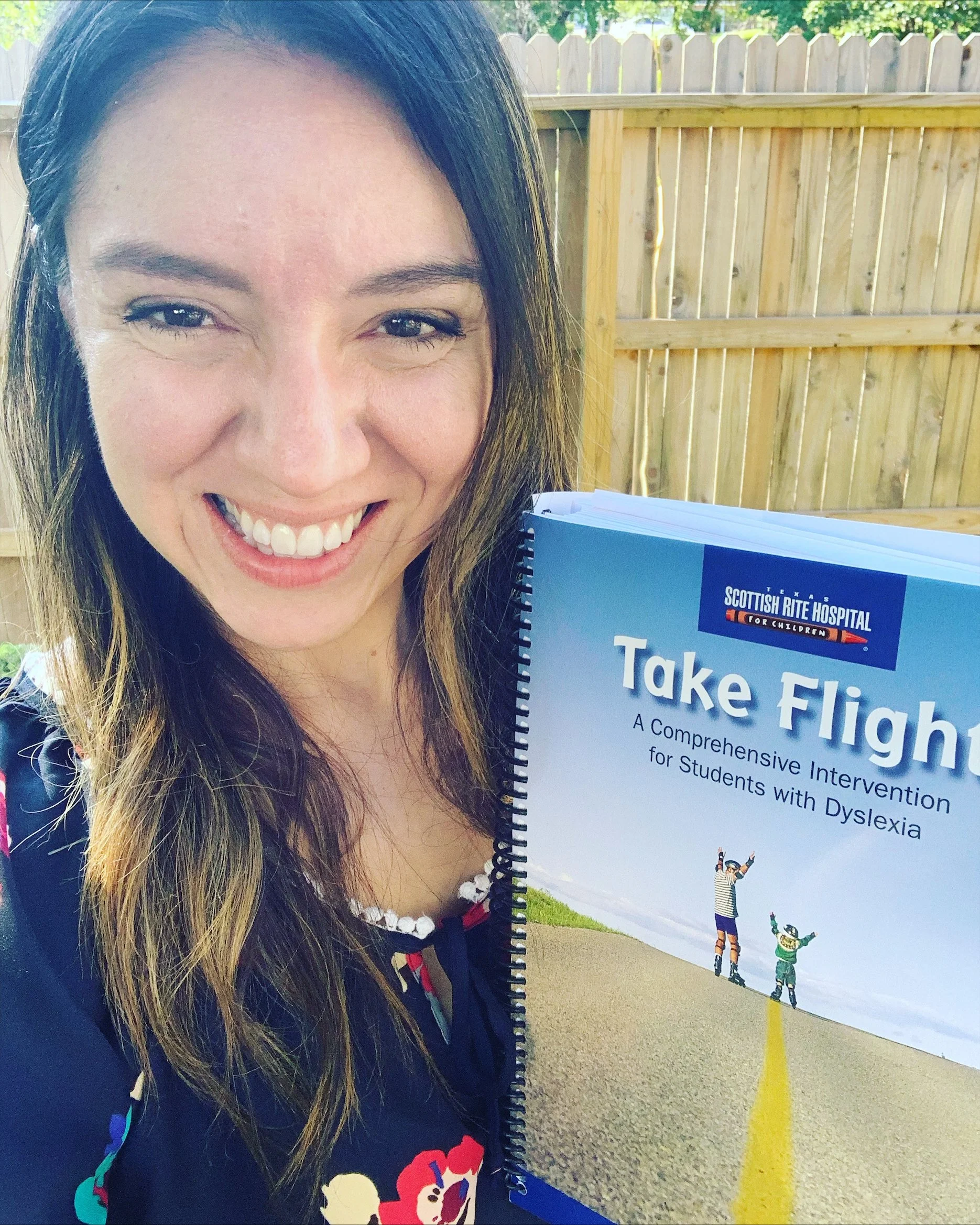
Samantha Ruiz’s Journey
From Dyslexia Center of Austin Trainee to CALT Training Pioneer
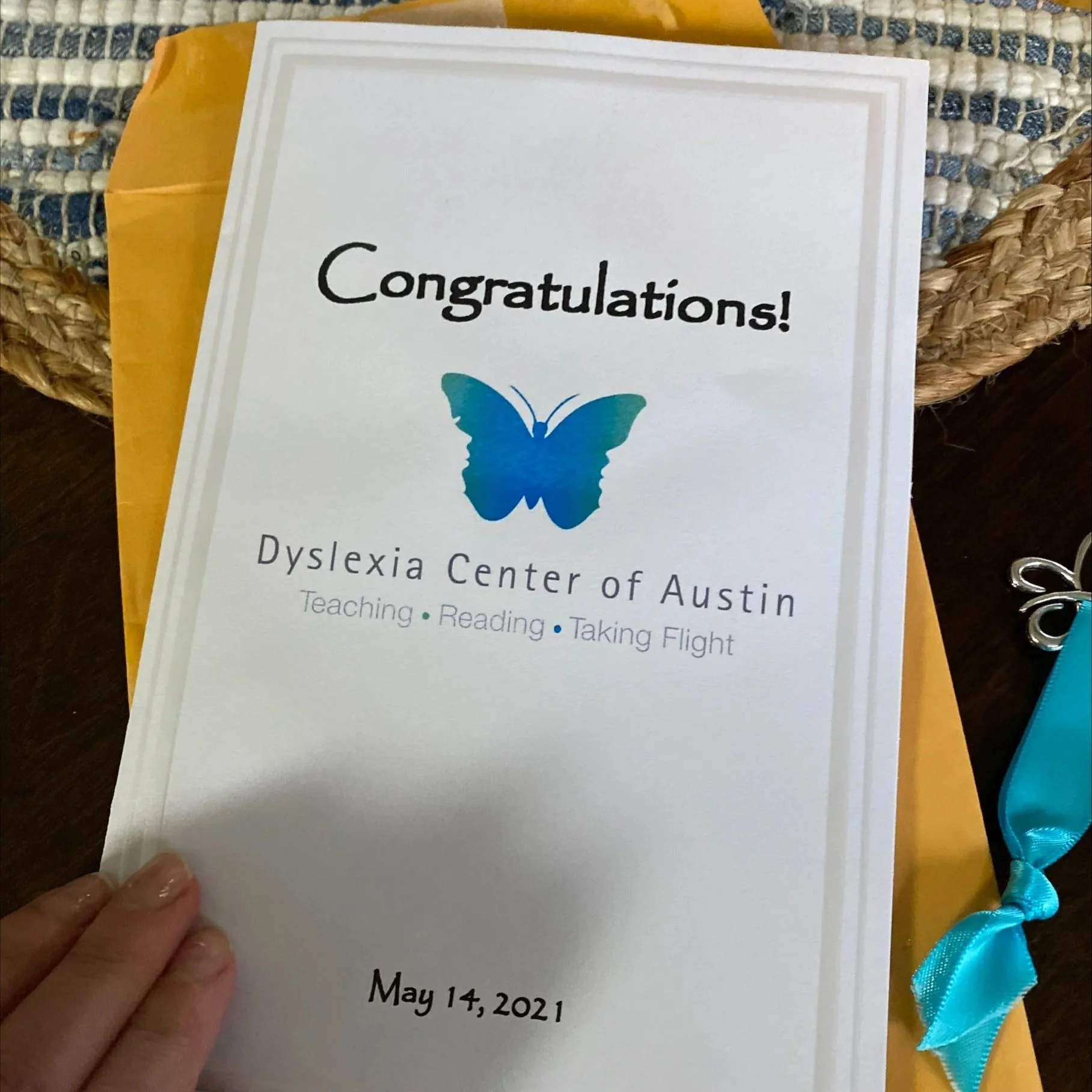
In 2018, Samantha Ruiz packed up her one-year-old son, and her mom, and made the trip from the Rio Grande Valley to Austin.
She had just been accepted into the Dyslexia Center of Austin’s 2-year Take Flight Dyslexia Therapist Training Program, which she self-funded.
She had no idea the trip would become one of the best experiences of her educational journey. Or that it would set her on a course—one that is really just getting started—to inspire others and make a real difference in her community.
Today, Samantha is a Certified Academic Language Therapist, an Educational Diagnostician, and the Dyslexia Lead at the Region One Education Service Center in Edinburg, Texas. She’s finishing her Qualified Instructor training this June—and her goal is to launch the Rio Grande Valley’s first local Dyslexia Therapist Training Program using the Scottish Rite for Children's Take Flight curriculum.
Her story is one of sacrifice, passion, and a deep commitment to the community she calls home. We sat down with Samantha to hear it in her own words.
QUESTION:
What drew you to dyslexia education?
Samantha:
I started in education, teaching Pre-K and Kinder. I loved teaching young readers how to read and building that foundation. When a charter school in my district needed a dyslexia teacher, I applied and got it.
I had a foundational understanding of dyslexia, but recognized the need to deepen my knowledge. I also knew there was a possibility that one of my own boys might have reading difficulties due to family genetics. In addition to wanting to help my students, I wanted to be prepared.
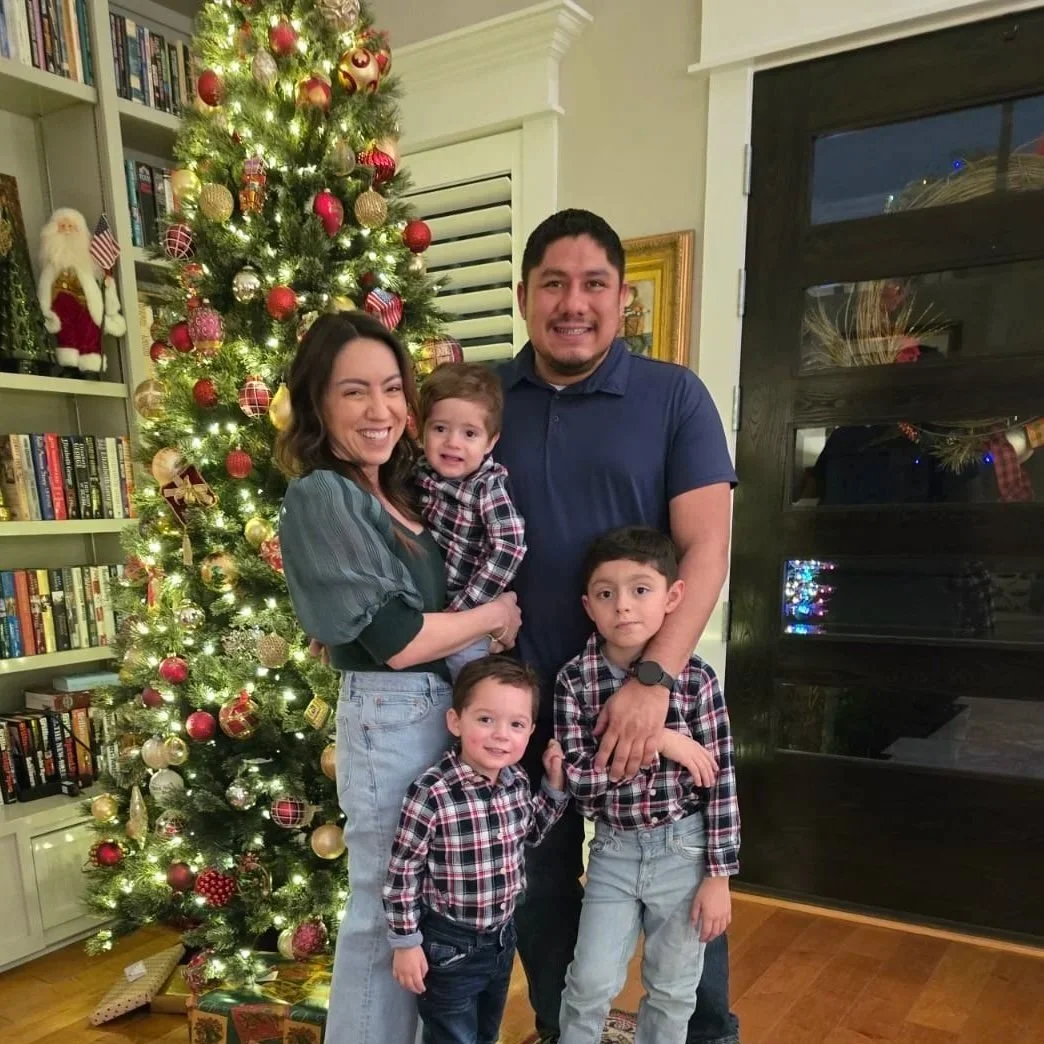
Samantha at home with her husband and three sons.
QUESTION:
What brought you to the Dyslexia Center of Austin?
Samantha:
I was the very first dyslexia teacher at my district, serving students across multiple campuses. But I wanted to feel more confident. I wanted to ensure that my students were getting the absolute best. So that’s where my search started, and the Dyslexia Center of Austin was the first place I found.
I submitted my application and was off for a three-week Introductory Summer Course in Austin, with my one-year-old and with my mom. My mom, Melly, is retired, so she stayed with my son during the day while I went to class. I self-funded it entirely.
QUESTION:
What was the training experience like?
Samantha:
To this day, it is one of the best experiences I have ever had in my educational journey. The Dyslexia Center of Austin is not only building a community through each cohort, where I have made lifelong friends, but the magnitude of what they have accomplished is truly amazing.
Every day they started with a live demonstration. I got to see a therapist in action in the classroom. That just helped solidify everything. Kelly O’Mullan, Katy Vassar, and Kari Steward were my Qualified Instructors—just incredible women. I always told Kelly, “I want to be like you when I grow up.”
QUESTION:
What happened when COVID hit and your husband overheard you teaching from home one day?
Samantha:
He said, “That’s the rule for vowel-consonant-e?” He said, “If I had you as a teacher when I was a child, I’m sure I wouldn’t have struggled as much.” He said he probably wouldn’t need audiobooks.
A lot of parents got to listen-in on our dyslexia therapy sessions because they were at home with their kids. I got a lot of, “Wow, Ms. Ruiz, I didn’t know that’s what they were doing with you. This is incredible.”
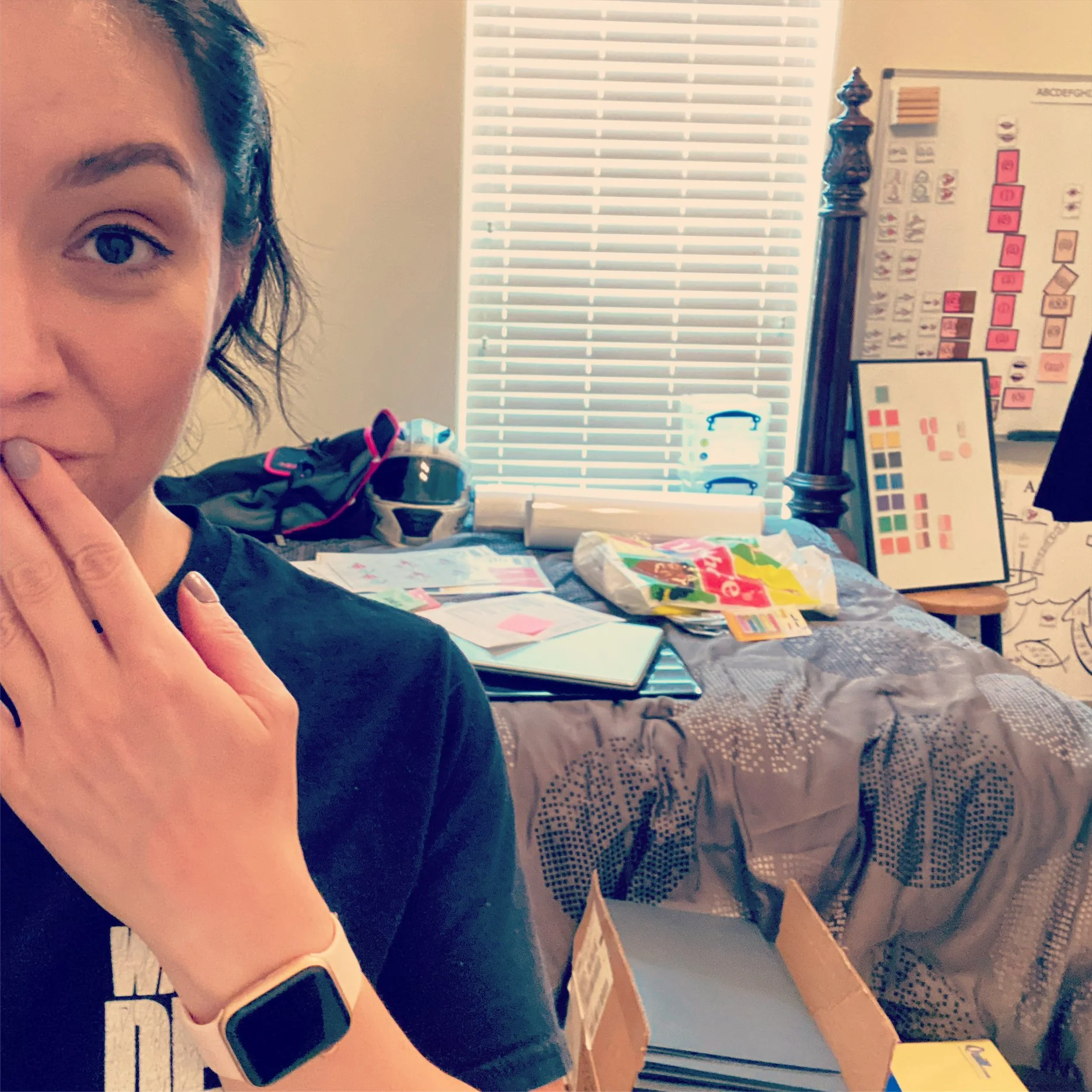
Teaching from home during the COVID-19 pandemic.
QUESTION:
After earning your CALT certification, you kept going?
Samantha:
Through the Dyslexia Center of Austin, doors opened with their collaboration with Midwestern State University. I went through MSU’s diagnostician program. Now I had both the evaluation piece and the instructional piece. And then I started my Qualified Instructor training, which I will finish in June. Now I have all three layers: I can evaluate, I can instruct, and I can train teachers to become CALTs.
QUESTION:
What keeps driving you?
Samantha:
My husband asks me that all the time. My answer is always the same: “I want more for our kids. I want more for our community.”
Having students tell me, “Miss, why am I dumb?” or “Miss, why can she do it, but I can’t?”
When you have a child talking so negatively about themselves, it really drives you to do better and to be the best for them.
I ran into a parent at my child’s fall festival back in November. I started seeing her son when he was in second grade. He’s now in ninth grade. She told me, “Ms. Ruiz, you’ve changed my son’s life. Beyond anybody else, beyond anything—you have had such a significant impact on my child. Not only academically, but emotionally, socially, all areas.”
That’s what keeps me going.
QUESTION:
What’s the need like in the Rio Grande Valley?
Samantha:
When I first started, if you searched the McAllen area on the Academic Language Therapy Association’s website, there were only a handful of CALTs listed for a geographic region of 50 miles. We’ve grown—you can find CALTs in Harlingen, Mission, Edinburg—but there’s still a massive gap. More students are getting identified, and there aren’t enough highly trained individuals to keep up.
The charter school where I was the first trained CALT is on track to have seven. They followed in my footsteps. After seeing my teaching, they said, “We’re gonna do it too, Sam.” That’s been incredible to watch.
QUESTION:
What are you building to bring CALT training to the Valley?
Samantha:
I’m hoping to start my first cohort of CALT trainees in the summer of 2027. A small group—about 10 teachers—because Kelly recommended that if it’s just me, I should keep it personalized and individualized.
There are 44 school districts within our region. My goal is to have at least two CALTs at every district. I really want to offer teachers the same experience that I got. They deserve it, and they deserve to get it close to home. You don’t have to travel to Austin, you don’t have to travel to San Antonio—it’s right here in your backyard in Edinburg, Texas.
Kelly has given me an excellent springboard. She has been such an amazing mentor. I hope to bring the Dyslexia Center of Austin experience to the Valley and make it work for our community.
QUESTION:
You’ve compared dyslexia therapy to medicine. Can you explain what you mean?
Samantha:
I always see dyslexia therapy as kind of like a prescription. Our kids need that explicit instruction like their medication. Without it, they can’t get better. There’s no pill for dyslexia. Dyslexia therapy is the medicine. It’s built to ignite and connect those neurological pathways for successful reading.
The younger we can catch them, the better—first grade, second grade, when their brains are more malleable. They’re like little sponges. But screening is only helpful if there’s someone to provide the dyslexia therapy. That’s why we need more CALTs.
QUESTION:
If you could go back to the beginning, would you still choose this path?
Samantha:
Absolutely. In a heartbeat.
I always tell my mom—God put me on this path for a reason. I didn’t go through two years of Dyslexia Therapist Training and two years of Qualified Instructor training to not turn it around. My intent has always been the same: we need more CALTs. We need more CALTs in the Valley. Every child deserves access to a CALT.
All it takes is one good teacher.
Samantha Ruiz is the Dyslexia Lead at the Region One Education Service Center in Edinburg, Texas. She completed her CALT training through the Dyslexia Center of Austin and is finishing her Qualified Instructor certification in June 2026. She plans to launch the first Dyslexia Therapist Training Program in the Rio Grande Valley using the Scottish Rite for Children's Take Flight curriculum in the summer of 2027.
Interested in becoming a Certified Academic Language Therapist? Learn more about CALT training.